

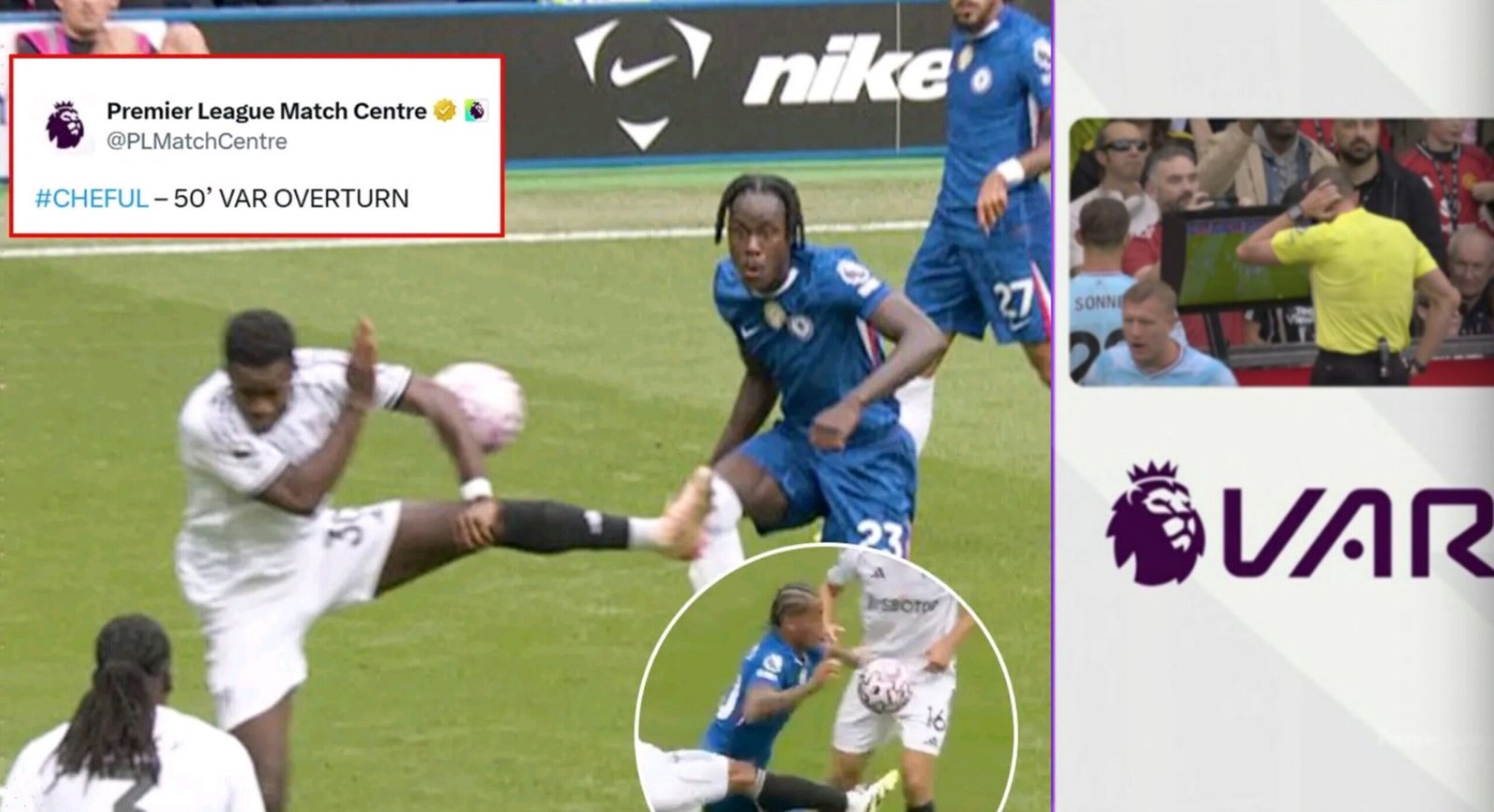
Chelsea’s recent 2-0 victory against Fulham was heavily influenced by VAR decisions, particularly a controversial penalty awarded to the Blues. The incident has caused considerable debate, with many questioning why the penalty was given despite a potential handball by Chelsea’s Joao Pedro earlier in the play.
The Penalty Decision and VAR’s Role
The controversy unfolded in the second half when a penalty was awarded against Fulham’s Ryan Sessegnon for a handball. However, prior to this, Joao Pedro appeared to handle the ball. The Premier League’s explanation for the penalty focused solely on Sessegnon’s action, stating he made his body “unnaturally bigger” by blocking a cross with his extended arm. This explanation from the match center completely ignored the potential handball by the Chelsea player.
Although no official reason was given for why Pedro’s handball was not considered, some experts have weighed in. TNT Sports pundit Karen Carney suggested that the officials might have ruled it as “ball to hand” rather than “hand to ball,” meaning the contact was deemed accidental due to the minimal distance between Pedro and the ball.
Ongoing VAR Debates
This decision is just one of several that have put VAR in the spotlight this season. The technology has been a source of ongoing frustration for fans, who often point to a lack of consistency in how decisions are made. The penalty against Fulham is the third time this season that a VAR ruling has benefited Chelsea, following similar incidents in previous matches. For example, a free-kick for Crystal Palace was recently disallowed in a match against Chelsea, further fueling the debate over VAR’s consistent application.
The recurring controversies highlight a central issue with the technology: while it’s intended to correct clear and obvious errors, its application continues to generate confusion and debate among players, managers, and
fans alike.





Leave a Reply